Outgrowing your starter home in Chandler and craving more space, smarter layouts, and a backyard made for Arizona evenings? You are not alone. Many East Valley families are planning a move-up this year and want clear, local guidance. In this guide, you will learn what a Chandler family home typically offers, where move-up buyers look, how today’s market and mortgage rates shape your budget, and the smartest ways to sequence your sale and purchase. Let’s dive in.
Chandler market at a glance
Chandler’s typical home values sit in the low to mid 500s. Zillow’s local index estimates about $516,460 as of January 2026. Redfin’s Jan 2026 median sale price reads closer to $489,000. These sources use different methods, so you will see variation by neighborhood and price tier.
Homes are taking longer to go under contract than in the 2020 to 2022 surge. Reported time to pending ranges from the upper 30s to the 50s and 60s depending on source and ZIP. The upside is more inventory and more room to negotiate, especially if you are shopping above the entry price bands.
Mortgage rates are a key tailwind. The weekly average 30‑year fixed rate recently moved to about 5.98 percent for the week ending Feb 26, 2026, according to the Freddie Mac Primary Mortgage Market Survey. A one point drop can open extra price range on a larger loan. Always get a pre‑approval to see your precise budget and monthly payment.
Chandler’s job base also supports demand for family housing. The city’s Price Road tech corridor and manufacturing employers create steady pull for homes near commuter routes and amenities. You can explore the city’s employment news and updates through Chandler’s Economic Development.
What a Chandler family home looks like
Chandler is largely single‑family, and much of the housing stock was built in the mid to late 1990s into the 2000s. The city’s housing overview is a helpful starting point for housing mix and planning context. See City of Chandler housing.
As a frame of reference, many local move‑up homes fall in the 2,300 to 3,200 square foot range with four or more bedrooms. Common lot sizes hover near 6,000 square feet, with plenty of homes offering pools or room to add one. You will find both traditional two‑story layouts and single‑level plans with split bedrooms.
Popular move‑up neighborhoods
- Ocotillo. South Chandler’s resort‑style master plan is known for lakes, a 27‑hole golf club, mature landscaping, and larger homes. Many properties offer waterfront or golf views, four or more bedrooms, and outdoor living made for entertaining.
- Fulton Ranch. A 520‑acre master plan with lakes, greenbelts, and paseos. You will find townhomes, single‑family, and custom homes with family‑friendly amenities and proximity to Price Corridor employers. HOAs are common and often include community upkeep and amenities.
- Downtown and Historic Chandler. Close to Dr. A.J. Chandler Park, this area features older ranch, Craftsman, and Spanish Revival styles on smaller lots. Many homes are remodeled. Parts of the Silk Stocking area have historic overlays that can guide exterior changes.
- West Chandler and south‑area suburbs like Sun Groves. These pockets often offer newer floor plans or larger lots at relative value compared with lakes and golf‑oriented enclaves.
- New construction. Recent communities and quick‑move‑ins let you buy modern plans with builder warranties and energy upgrades. Builders sometimes offer incentives when inventory grows, so it is worth checking current releases.
Price points vary widely by neighborhood, lot, and level of finish. Within the same subdivision, homes on larger or waterfront lots can trade at a premium. Your agent should pull hyper‑local comps within the last 6 to 12 months before you make an offer.
Design priorities that pay off
Move‑up buyers in Chandler tend to want a few key features. If you focus here, you will find options faster and protect resale potential later.
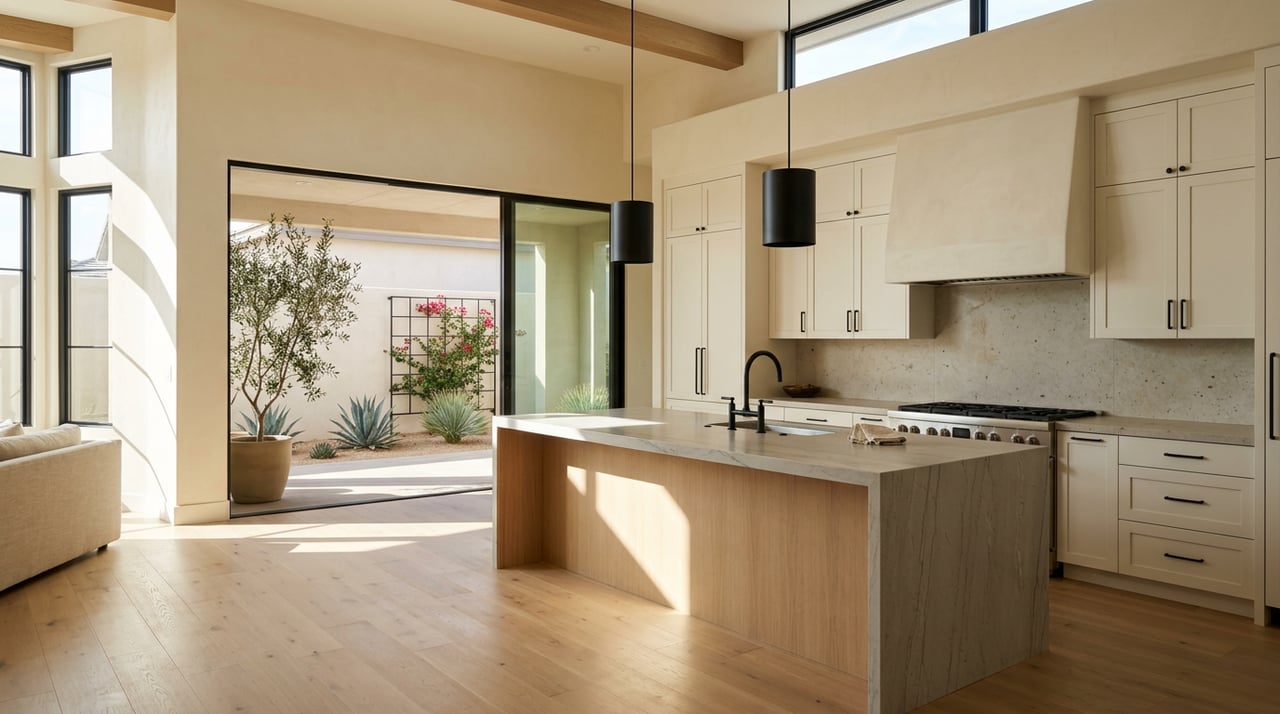
- Kitchen first. Open kitchens with islands that connect to a great room. Look for enlarged pantries, gas or upgraded cooking packages, and generous countertop runs.
- Bedrooms and flex space. Four or more bedrooms, a dedicated office, or a bonus room for homework and media. Split primary suites are common and useful.
- Outdoor living. Covered patios, turf or child‑friendly yards, and pools or pre‑plumbed lots for a future pool. Shade and misters are big pluses in summer.
- Energy and systems. Newer HVAC, upgraded windows, and water‑wise landscaping reduce monthly costs in Arizona’s climate.
Use smart filters to zero in on the right homes:
- Minimum 2,300 to 2,500 square feet
- Four or more bedrooms
- Lot size that fits your yard or pool goals
- “Kitchen remodeled,” “updated bath,” or build years in the 1990s to 2010s
- HOA if you prefer community maintenance and amenities
Renovation budgets and ROI
If a home is close to perfect, design updates can bridge the gap. Here are order‑of‑magnitude ranges to help you plan. Always get local contractor bids for accuracy.
- Kitchen remodel. Midrange projects in Arizona often run from the mid tens of thousands. Many meaningful updates fall near 25,000 to 50,000 depending on scope and appliances. A full custom overhaul can reach higher. See regional cost context from a local remodeler’s guide on kitchen remodel ranges.
- Bathroom updates. A light refresh can be modest. A full primary bath reconfiguration typically runs into the tens of thousands. Industry roundups outline typical ranges and factors in this kitchen and bath remodeling guide.
- Additions. Structural additions usually price by square foot and can exceed 100 to 200 per square foot depending on systems and finishes. Balance cost versus likely resale lift.
On resale, kitchens, updated primary baths, efficient HVAC and windows, and well‑designed outdoor living tend to be among the stronger recapture categories. The best return comes from matching your finish level to neighborhood expectations. Ask for neighborhood comps and recent sale photos before planning a major project.
Commute, schools, HOAs, and taxes
Commute. Chandler neighborhoods with quick access to the Price Road tech corridor or the 101, 202, and 10 often hold value with dual‑income households. Explore employer momentum through Chandler Economic Development news.
Schools. Much of Chandler is served by Chandler Unified School District, and parts of west and south Chandler are within Kyrene District boundaries. District lines do not match city lines, so verify each parcel with official tools. Use Kyrene boundary maps and Chandler Unified resources such as Chandler High’s site to start your research. School information changes over time, so confirm directly with districts.
HOAs. Many master‑planned communities include homeowners associations. Dues often cover common‑area care and amenities, sometimes irrigation for lake communities. Ask for current dues, transfer fees, and any planned assessments to understand the true monthly cost.
Property taxes. Arizona uses Full Cash Value and Limited Property Value to calculate assessed value. School and special district levies are typically a large portion of the bill, with the city portion smaller by comparison. For parcel‑specific estimates and payment details, use the Maricopa County Assessor and Treasurer resources.
Buy and sell timing strategies
You have two common paths when upsizing. Each has tradeoffs.
- Sell first. You close on your current home, then buy. Benefits include cash in hand and a stronger position when you write an offer. You will need a plan for short‑term housing.
- Buy before you sell. You purchase the next home first. Some buyers use a HELOC, home equity loan, or a cash‑out refinance to fund the down payment. Each option has different rate structures and eligibility rules. For a plain‑English overview of HELOCs, see this HELOC guide. Speak with a lender and a tax advisor to choose the right structure.
If you have lived in your current home for at least two of the last five years, you may qualify to exclude up to 250,000 in gain if single or 500,000 if married filing jointly. This is under Internal Revenue Code Section 121. Review the rules in IRS Publication 523 and consult your tax professional.
Your move‑up action plan
Use this concise checklist to move from research to results:
- Confirm budget and payments
- Meet with a lender for a pre‑approval, estimate monthly payments at several rates, and map total cash for down payment and closing costs. Track how HOA dues or a pool service affect your monthly number.
- Clarify equity and taxes
- Estimate net proceeds from your current home. Review Section 121 exclusion in IRS Publication 523 and ask a tax pro about your situation.
- Define must‑haves
- Prioritize kitchen layout, bedroom count, work‑from‑home space, yard or pool needs, and commute time limits.
- Shortlist neighborhoods
- Compare Ocotillo and Fulton Ranch if you want resort‑style living. Consider West Chandler and south Chandler for larger lots and relative value. Add Downtown if you prefer walkable dining.
- Prep your current home
- Fresh paint, simple landscaping tune‑ups, and designer staging can speed time to contract and lift your sale price. Presentation is a strategic lever in Chandler’s market.
- Choose timing strategy
- Decide between sell first or buy before you sell. If you plan to buy first, confirm financing structure and carrying costs.
- Verify parcel‑level details
- Pull HOA dues and rules, check district boundaries with official tools, and use Maricopa County resources to understand the property tax picture.
- Tour with intent
- Focus on floor plan flow, orientation and shade, mechanical systems age, and exterior maintenance. Look for simple wins like paint and lighting that can shift the whole feel.
- Offer and negotiation
- Use recent comps within the same subdivision and the last 6 to 12 months. Consider credits or rate buydowns if a seller needs price integrity but is flexible on terms.
Ready to explore your options?
If you want a bigger home and a smoother path to it, partner with a design‑first advisor who knows Chandler block by block. From targeted neighborhood searches to a polished, magazine‑ready listing that funds your next step, you will feel guided at every turn. Connect with Jessica Pasquale to book a complimentary staging consultation and market plan.
FAQs
Should I sell my Chandler starter home before shopping for the next one?
- Sell first gives you cash in hand and stronger buying power, while buying first avoids temporary housing but can add carrying costs, so confirm financing and timing with your lender and agent.
Which Chandler neighborhoods balance space and long‑term resale?
- Ocotillo and Fulton Ranch offer resort‑style amenities and larger homes, while West and south Chandler often deliver larger lots or newer plans at relative value and Downtown adds walkable dining.
How do I estimate my new home’s property taxes in Chandler?
- Use the Maricopa County Assessor tools to review assessed values and tax calculations, then model your payment with your lender using current rates and levies.
What renovations usually add the most value in Chandler?
- Kitchens, updated primary baths, efficient HVAC and windows, and well‑planned outdoor living typically see stronger resale recapture, with finish level matched to neighborhood comps.
How do I verify which schools serve a specific Chandler address?
- Confirm directly with district tools by checking Kyrene boundary maps and Chandler Unified resources like Chandler High’s site, then contact the district to verify.
How will an HOA affect my monthly budget in Chandler?
- Add dues and any transfer or capital reserve fees to your payment estimate, and review what the HOA covers such as amenities, landscaping of common areas, and community irrigation in lake neighborhoods.